Picture this: It’s 1955. The air is thick with the smell of roasting meat and the promise of a perfectly set Jell-O mold. In a crisp, cotton dress and a string of pearls, our heroine—let’s call her Betty—is gazing longingly at a full-page advertisement in Life magazine. The object of her desire? A gleaming, revolutionary KitchenAid stand mixer. It’s a marvel of modern engineering, a symbol of post-war prosperity, and a ticket to effortless entertaining. But with a price tag of around $100, it’s not just a kitchen tool; it’s a major financial commitment.
Fast forward to today. Betty’s granddaughter, let’s call her Chloe, is scrolling on her phone, her thumb pausing on a stunning, cobalt blue KitchenAid Artisan Series mixer. The price? Around $400. Her first thought might be, “Whoa, that’s a splurge.”
But what if I told you that Chloe is actually getting a better deal than her grandmother? What if this iconic appliance is one of the last bastions of true, marriage-outlasting, heirloom-quality manufacturing in a world of disposable gadgets?
Here at Time Genius, we use AI to dive deep into the past, comparing historical events and economies to our modern world. So, we fired up our engines and asked: What would a 1950s housewife, with her values of durability, performance, and social status, actually buy if she were magically transported to 2024?
Spoiler alert: She’d head straight for that KitchenAid Stand Mixer, and she wouldn’t even blink at the price. Here’s why.
The 1950s: Where a Mixer Was a Status Symbol

To understand Betty’s choice, we have to time-travel back to her world. The 1950s weren’t just about poodle skirts and rock ‘n’ roll; it was a decade of profound economic and social transformation.
- The Average Income: The median family income in 1955 was about $4,400 per year.
- The Cost of a Mixer: That coveted KitchenAid mixer? It retailed for approximately $100 (often more, depending on the model).
- The “Wow” Factor: Doing the math, that mixer cost about 2.3% of a family’s annual income. Let’s translate that into 2024 dollars. According to our AI analysis at Time Genius, the equivalent purchase for a median US household income (~$74,000) would be a staggering $1,702.
Let that sink in. Betty wasn’t considering a simple kitchen purchase. She was contemplating an investment on par with a high-end laptop or a large-screen TV today. This was a purchase discussed with a husband, budgeted for over months, and displayed proudly on the countertop for every guest to see. It wasn’t just a mixer; it was a statement. A statement that said, “We are modern. We are efficient. We have arrived.”
They bought it once. It mixed dough for birthday cakes, cookie dough for Christmas, and meringue for countless dinner parties. It was passed down to daughters and sons. These machines were built not for a product lifecycle, but for an actual human life.
The Time Genius Economic Shock: $100 Then vs. $400 Now
This is where our time-traveling AI at Time Genius delivers its most jaw-dropping report. The pure inflation calculator tells one story, but the story of value tells another.
Yes, purely based on consumer price inflation, $100 in 1955 should be about $1,150 today. So why is the iconic KitchenAid Artisan Mixer only $400?
On the surface, it looks like a steal. But the real answer is a complex cocktail of globalization, manufacturing efficiency, and fierce competition. The 1950s mixer was almost entirely made and sold in the USA. Today’s mixers are global citizens, with parts and assembly optimized across continents to keep costs down.
But here’s the twist Betty would instantly understand: The core value proposition is identical.
The modern KitchenAid mixer retains the same legendary planetary mixing action, the same all-metal construction (in the key components), and the same ethos of being a “workhorse” that it was 70 years ago. While the sticker price relative to income is lower, the promise is the same: buy this once, and you will never need another one.
In a world of planned obsolescence, where a $1,000 smartphone is designed to be replaced in two years and a $200 blender burns out after 18 months of smoothie-making, the $400 stand mixer is an anarchic rebel. It’s a product that stubbornly, defiantly, refuses to die.
It’s the $400 appliance that outlives marriages, outlasts trends, and outperforms expectations. It’s a tangible link to a time when “they don’t make ’em like they used to” wasn’t a nostalgic sigh, but a standard.
Why Betty Would Approve of the KitchenAid Artisan (Passion Red) Today
If we could bring Betty into a modern appliance store, her eyes would glaze over at the wall of air fryers, instant pots, and single-use avocado slicers. It would be sensory overload. But her gaze would inevitably land on the KitchenAid display, and a knowing smile would spread across her face. She’d recognize a fellow titan.
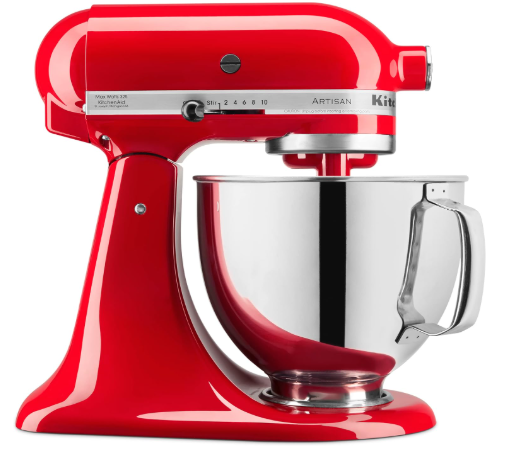
Here’s what she’d see:
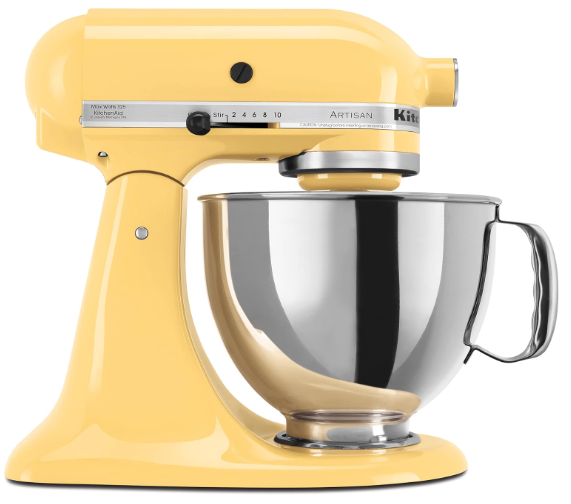
- The Heirloom Aesthetic: Betty didn’t buy beige. She bought color. From pastel green to a bold Cadillac pink, these mixers were centerpieces. Today’s array of over 20 colors, from the classic Empire Red to a stunning Contour Silver, would thrill her. She’d understand that an appliance this beautiful deserves to be seen, not stuffed in a cupboard. It’s not just a tool; it’s kitchen jewelry.
- The Uncompromising Performance: Betty’s mixer had one job: to mix anything she threw at it, from light whipped cream to thick, heavy bread dough, without complaining, stalling, or burning out a motor. The modern KitchenAid Artisan Series boasts a 325-watt motor that is the direct descendant of that no-nonsense work ethic. She’d appreciate that the heart of the machine—its power and durability—remains the non-negotiable priority.
- The Ecosystem of Attachments: This is where Betty’s mind would be truly blown. Her 1950s model might have had a few attachments, like a meat grinder or a food tray. Today, the KitchenAid isn’t just a mixer; it’s the command center of the kitchen. With attachments, it can spiralize vegetables, make pasta, grind meat, shred poultry, and even ice cream. She’d see this not as frivolous, but as the ultimate expression of efficiency and multi-purpose utility—a core 1950s value. One powerhouse machine that does it all? That’s pure Betty.
- The Permanence in a Throwaway Culture: Above all, Betty would value the story. She’d read the reviews, see the videos of people using their grandmother’s 40-year-old model, and understand that this object transcends trend cycles. In our disposable world, choosing to invest in something built to last is a radical act. It’s a vote for quality over quantity, for sustainability over wastefulness. Betty, who saved string and reused aluminum foil, would deeply respect that.

The Ultimate Test: Does Your Modern Purchase Have “1950s Energy”?
This is the fun part. Let’s apply the “Betty Test” to our modern purchases. Does it have the quality, durability, and timeless value to justify its place in your home for decades?
- A $1,200 iPhone: Sorry, Tim Cook. While miraculous, it has an expected lifespan of a few years. It’s a consumable, not an heirloom. Betty’s Verdict: ❌ A frivolous expense.
- A $250 Subscription Meal Kit Box (for a year): The food is temporary. The cost is recurring. The value disappears the moment you eat it. Betty’s Verdict: ❌ Financially irresponsible.
- A $400 Fast Fashion Haul: A closet full of poorly made clothes that will be out of style and falling apart in a season. Betty’s Verdict: ❌ An embarrassment.
- A $400 KitchenAid Stand Mixer: A single, upfront investment that provides utility, joy, and beauty for a lifetime. It can be passed down, becoming more valuable as an object with a story. Betty’s Verdict: ✅ The only sensible choice.
The mixer isn’t just a kitchen appliance; it’s a portable philosophy. It whispers that some things are worth saving for, worth investing in, and worth keeping.
Your Turn to Be a Time Genius
The past isn’t just a series of dates and events; it’s a repository of wisdom on how to live. The 1950s housewife, often unfairly stereotyped, understood value on a profound level. She knew that true luxury wasn’t about being cheap or expensive; it was about being worth it.
That $400 mixer on your screen isn’t a cost. It’s a time machine. Every time you use it, you’re connecting to a legacy of craftsmanship and smart consumption. You’re making a choice that your future self—and maybe even your future grandchild—will thank you for.
So, what will you choose? The disposable thrill of the new, or the enduring satisfaction of the truly valuable?
Disclosure: This article may contain affiliate links that earn us a commission at no extra cost to you. We only recommend products we believe in.
Ready to make an investment that would make your grandmother proud? Click below to explore the iconic KitchenAid Artisan Series Stand Mixer on Amazon. Choose your color, and start building your own heirloom today.
SHOP THE KITCHEN AID ARTISAN STAND MIXER – AN HEIRLOOM FOR THE MODERN AGE
P.S. Curious about the cost of living in any other year? Become a Time Genius yourself! Head to our homepage, input any year, and our AI will generate a personalized report on the major events, economics, and culture of the time. It’s history, personalized.